







Purchase
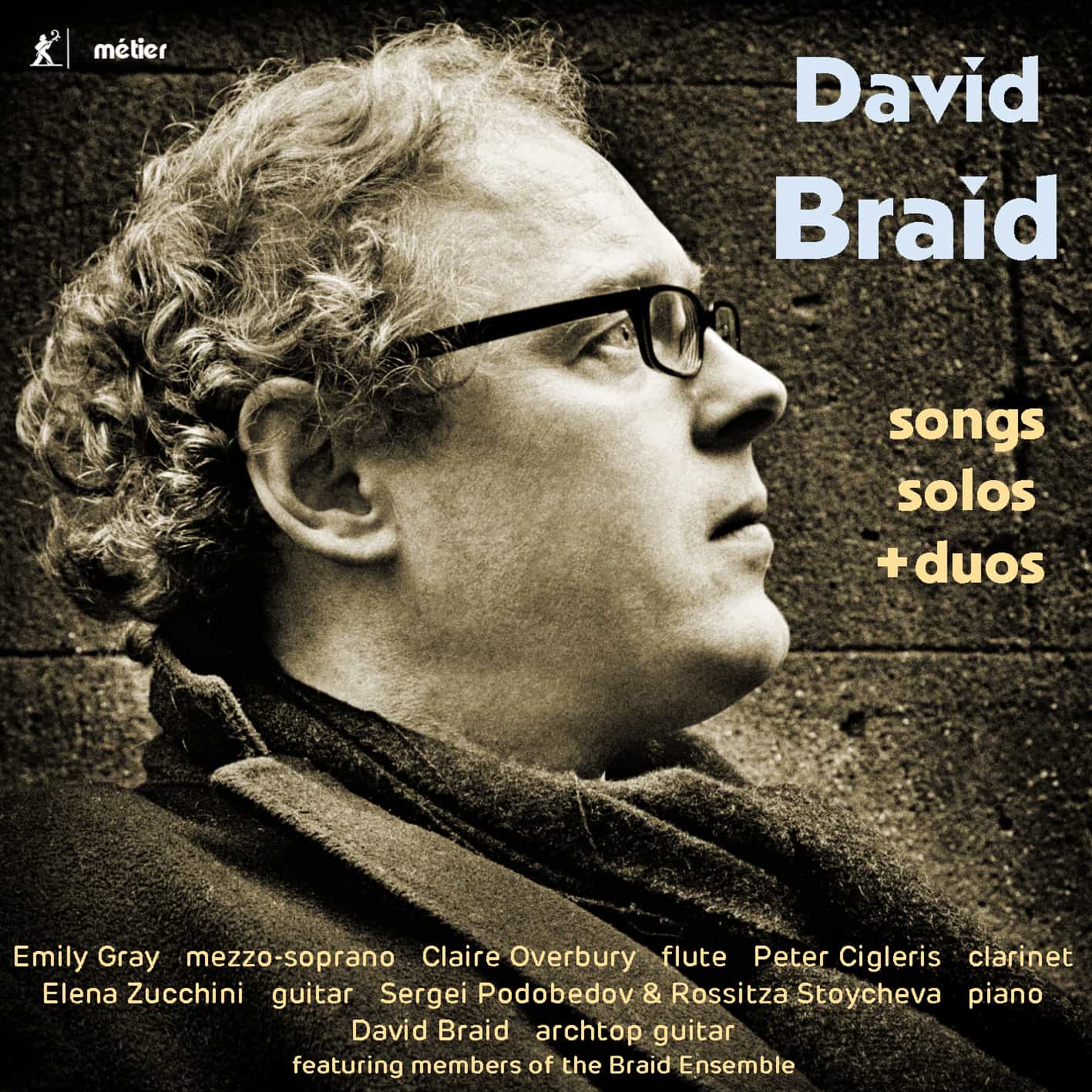
In the world of new music where ‘anything goes’ it is a very special composer who can create a sound and style so individual that it stands out as exceptional; such a composer is David Braid, whose writing is truly ‘art-music’ but has resonances with tone colours found in other genres which make its appeal almost universal, as seen by his recent album on Toccata Classics.
The key to his sound is first a choice of awesomely good performers, including one of the most wonderful mezzo-soprano voice of today, owned by Emily Gray; and also to Braid’s use of the resonant archtop (electric) guitar which is a perfect accompaniment to the vocal tracks and a nicely matched partner for the piano.
Certainly one of the most distinctive and beautiful new-music albums of recent times.
-
David Braid (b.1970):
- Upon Silver Trees, Op. 34 Invocation and Continuum, Op. 38
- I. Invocation
- II. Continuum Sonata for Archtop Guitar and Piano, Op. 19
- I. Invocation
- II. Waltz
- III. Fugue Invention and Fugue, Op. 36
- I. Invention
- II. Fugue Songs of Contrasting Subjects, Op. 47
- I. She goes but softly
- II. Fear no more
- III. Music to Hear
- IV. How Can I Then Return
- V. Is it thy Will Four Intimate Pieces for Archtop Guitar, Op. 21
- I. Lirico
- II. February Lament
- III. Valse Triste
- IV. Tomorrow’s Daydream First Piano Sonata, Op. 14
- I. Stabile con calma
- II. Poco melancholia e tranquillo
- III. Ossessivo Two Solos for Archtop Guitar
- Wordless Song, Op. 45
- For Alex, Op. 43
- 01 Upon Silver Trees, Op. 34
- 02 I. Invocation
- 03 II. Continuum
- 04 I. Invocation
- 05 II. Waltz
- 06 III. Fugue
- 07 I. Invention
- 08 II. Fugue
- 09 I. She goes but softly
- 10 II. Fear no more
- 11 III. Music to Hear
- 12 IV. How Can I Then Return
- 13 V. Is it thy Will
- 14 I. Lirico
- 15 II. February Lament
- 16 III. Valse Triste
- 17 IV. Tomorrow's Daydream
- 18 I. Stabile con calma
- 19 II. Poco melancholia e tranquillo
- 20 III. Ossessivo
- 21 Wordless Song, Op. 45
- 22 For Alex, Op. 43